Researchers are investigating how software-defined cellular
networking might be used to give smartphone users the next generation
of ultra fast broadband – 5G.
Currently, the fourth generation of mobile phone connection
technology, 4G, in as far as it has been adopted provides broadband-type
connectivity for enabled devices such as smartphones, tablet computers,
laptops and other gadgets through two standards: the Mobile WiMAX
standard and the first-release Long Term Evolution (LTE) standard.
Peak speeds were set in the standards at 100 megabits per second
(Mbit/s) for mobile users and ten times that for static, domestic 5G
users, 1 gigabit per second. 100 Mbits/s is three times faster than the
earlier 3G system but users commonly do not see data transfer at such
high rates, downloads are usually at best 10 Mbits/s. As yet, there is
no single standard for 5G although various systems are being touted
based on rebuilding the cellular networks to be super-efficient and
exploiting different frequencies with their capacity for greater data
rates.
The hope is to be able to achieve download speeds of perhaps 10
Gbits/s, researchers said. In practice, this means that a
high-definition movie can be downloaded in less than half an hour. The
research is being undertaken by Ming Lei of Samsung Research and
Development Institute China, Lei Jiang of NEC Laboratories, Beijing with
colleagues at the University of Electronic Science and Technology of
China in Chengdu, Beijing Jiaotong University and the University of
Kurdistan.
They have assessed the latest developments aimed at 5G systems and
have proposed their own novel end-to-end (E2E) software-defined cellular
network (SDCN) architecture which
they say offers flexibility, scalability, agility and efficiency.
Moreover, it will be sustainable for providers as well as profitable,
researchers said. They are currently building a demonstration system
that will allow them to utilise several promising technologies in their
architecture for 5G including cloud computing, network virtualisation,
network functions virtualisation and dynamic service chaining.
The approach, they suggest, could overcome bandwidth shortage
problems, improve quality of service so avoiding delays and data loss,
as well as reducing the vast number of error-prone network nodes needed
for such a system. The research was published in the International
Journal of Communication Networks and Distributed Systems.
Xiaomi has been wooing audiences with its ‘value for money’
products and unique flash sales in which devices fly off the shelves in
seconds. After the popular Mi 3 and best selling Redmi 1s, the company
is now gearing up to launch the Xiaomi Redmi Note in India which will be
available to users soon.
It was Hugo Barra who
spilled the beans about Note coming to India soon, and later Xiaomi
India head, hat the device will come to India in December. Without
wasting much
time, the company quickly came up with a contest on Facebook, further
hinting that the Redmi Note is on the way.
The Redmi Note has finally launched in India and will be available
in two variants: 3G dual-SIM, priced at Rs 8999, and a 4G variant priced
at Rs 9,999. In an exclusive tie-up with Airtel, the 4G variant will
sell in select Airtel retail stores.
Flipkart has confirmed that registrations for the Redmi Note will open today at 6pm and the phone will be launched on December 2 as expected.
Before you part with your cash, here’s all you need to know about the latest Xiaomi phablet.
Design and Display
With the Redmi Note, Xiaomi plans to bring large screen experience on
a budget for audiences. The sub-Rs 10,000 device sports a large
5.5-inch HD display with 720 x 1280 pixels of resolution, and a pixel
density that goes all the way up to 267 ppi.
Weighing 199 grams, it is slightly heavier than other popular devices
that come with a 5.5-inch display. The plastic -built device
measures 154 x 78.7 x 9.5 mm. It comes with a removable cover that can
be swapped with other designs, but we wonder if these covers will be
made available in India.
Redmi Note teased on Facebook
OS
The Redmi Note runs company’s proprietary MIUI, based on the rather
older Android 4.2.2 Jelly Bean. It comes with drawerless home screens
similar to iOS. You will also find several themes and the Lite mode that
makes it super-easy for people with visual impairments or even for the
tech challenged users. The company has also released the new MIUI 6 that
is based on Android KitKat, but heavily inspired by iOS 7. There is no word on whether the Redmi Note will be getting the upgrade.
Processor
The Redmi Note is powered by a ‘true’ octa-core Mediatek processor
clocked at 1.6GHz and coupled with 2GB RAM. The MediaTek MT6592 uses all
eight cores at the same time.
Camera
This budget Note offers a 13MP rear snapper with LED flash and auto
focus. It also supports 1080p recording at 30fps. For selfies and video
conferencing, one will also find a 5MP front-facing camera. It comes
with camera features like geo-tagging, touch focus, face/smile detection
and HDR.
Coming soon!
Connectivity
The Redmi Note provides all the necessary connectivity options,
including 3G, Wi-Fi 802.11 b/g/n, Wi-Fi Direct, Bluetooth 4.0, A-GPS and
GLONASS. The smartphone will be available in a 3G dual-SIM variant
along with a 4G variant.
Miscellaneous specs
The Redmi Note comes with 8GB onboard storage that is expandable up
to 32GB via a microSD card slot. There is support for sensors
like accelerometer, gyro, proximity and compass.
We might have not been this excited as children to have a candy
lollipop as much as we are to have the latest Android 5.0 Lollipop
update installed on to our devices.
The time finally arrived when our Android OS would get a quick
makeover and offer us with either some simple; or extravagant changes.
But are these changes going to make our lives easier? Is Lollipop far
advanced than KitKat? We check out some of the prominent changes that
have been brought about in the latest update.
1. Inbuilt Flashlight
It would always be puzzling as to why Google did not pin a flashlight
in our notifications panel just like iOS has in its control center.
Lollipop brings out that change. Without installing any third-party
apps, users can simply use the flashlight by pulling down the
notification panel. Make sure your smartphone has an LED flash.
2. Battery changes
Battery seems to be given priority in Android Lollipop. No longer do
users have to lay bets on how long their battery would last for. The new
OS has two new and much needed features which were not available on
KitKat. It shows you how long it would take to charge your phone and a
small showcasing how much time is left before the battery runs
out. After you have plugged in your phone for charge, your home screen
will show you the time until full charge.
3. Guest user
We all have people around us who lay their hands on our phones.
Thankfully, Android Lollipop helps us with this issue. Just like
different Users in Windows, Lollipop gives you the liberty to add guest
users or even create a profile for a friend/relative. This way, you can
limit the amount of information that others can view. You can add a
guest by simply going to Settings – Users – Add Guest.
4. Flappy Bird easter egg
If Flappy Bird wasn’t frustrating, Lollipop offers you a modified
version of the game. Instead, here you have an Easter egg to unlock.
Users can go to Settings – About phone and click several times and you
will get the android robot in place of the bird.
5. Notification panel
Needless to say, the notification panel has been made too simple for
the user. It’s simplicity in design is the plus point. Unlike KitKat,
the most useful feature added here is the ability to view your detailed
notifications on your lock screen. Though this might be a problem around
work spaces if you leave your phone unattended, anyone can have a look
at your notifications even though your phone is locked. It can be
disabled by going to Settings – Sound and Notification – When device is
Locked – Don’t show notifications at all.
More images-----
Android kit kat 4.4
Android lollipop 5.0
6. Trusted Places
Trusted Places is a smart feature which has been added in to
Lollipop. Though most of our phones have passwords, it would be a task
to disable it when we enter familiar premises such as our car or home.
Trusted Places is a feature where a user can declare certain locations
as safe and they wouldn’t need to unlock their phones once they enter
those spaces. You can set the location by heading to Settings – Security
– Smart Lock.
7. Soft key redesign
Soft key buttons receive a change in this update and it is a rather, a
surprising change. The icons are smaller and look compact. A very
simple yet pleasant design.
8. Multitasking
Multitasking has completely changed in Android Lollipop. The feature
allows you to scroll through your notifications in a simpler manner. It
is easier and allows you to see more details even before you enter the
app.
9. Prioritize apps
It can be super annoying if your phone is filled with umpteen apps
and throughout the day, you are bombarded with notifications. Lollipop
gives you the liberty to prioritize your apps so that you can receive
notifications from the ones you want. It works out perfectly during
sleep hours as you can only receive notifications from important apps
and not games or check-in notifications.
10. Quick access to Chromecast
No need to install any third-party apps once you have the updated
your phone to Lollipop. There is an official app now from Google to
solve our problems. For the people who love to stream media from
dongles, it is as simple as going to the notification panel and taping
on Cast Screen.
Transformers: Revenge of the Fallen (or simply Transformers 2) is a 2009
American science fiction action film directed by Michael Bay and
executive produced by Steven Spielberg. It is a sequel to 2007's
Transformers and the second installment in the live-action Transformers
series taking place two years after Transformers. The plot revolves
around Sam Witwicky (Shia LaBeouf), who is caught in the war between two
factions of alien robots, the Autobots and the Decepticons. Screenshots......
Developer: Beenox Studios. Publisher: Activision. Features Of This Compressed Game:
Repack Full Game To 2.3 GB.
Easy To Install and Play With Guide.
No Game Crash Issue.
Full Install Feature Available.
Full Version With Pre Activated.
100% Checked and Secure (Tested By ATH Team) Minimum System Requirements:
CPU: Intel Core 2 Duo E6400 2.13GHz or AMD Athlon 64 X2 Dual Core 4800+
RAM: 1 GB RAM
VGA: Nvidia Geforce 7600 GT 256MB or ATI Radeon X1600 Series
DX: DirectX 9.0c
OS: Windows XP (with Service Pack 3) or Windows Vista
HDD: 5 GB or More Free Space
How To Install This Game:
1. First Open - "setup.exe" Setup File.
2. Now Select Which Location You Want To Save This Game ...... Default Is Your Program Files
3. Wait Few Minutes (10-20 Min)
4. All Process Will Complete Automatically.
5. After All Done You Can See a Shortcut On Desktop. (Play Transformers Revenge of the Fallen)
6. Now Click and Open The Game From Shortcut.
7. Play And Enjoy ......... :)
***This is a Full Version Game. No cut scene, no audio cut from this game.
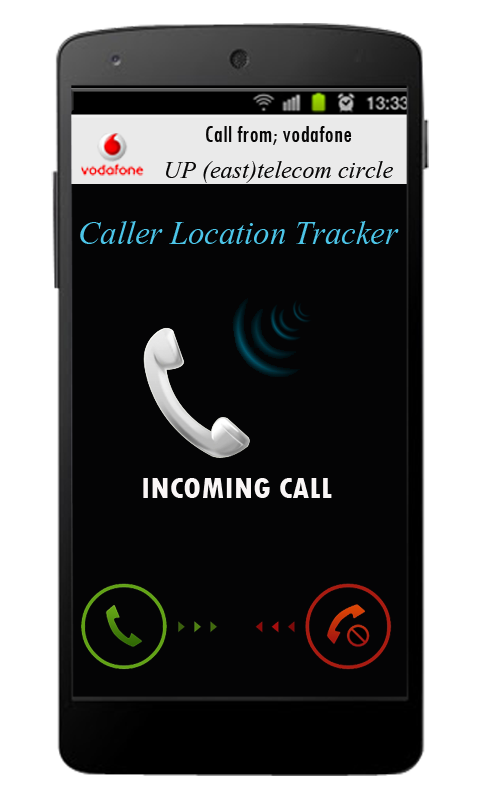
Mobile Number Locations Pro - Full Android Application Free Download | 3.49 MB
Mobile Number Locations Pro enables you to know location of Incoming
Calls, Mobile Contacts, Mobile Numbers & any Phone Numbers. Browse
your Mobile Phone Contacts sorted by locations (at Country/State/City
level). Block Calls and SMS from unwanted mobile phone numbers &
Callers. It will also show Telephone Operator of the mobile or landline
phone number initially assigned to. For all incoming calls, it also
tells time of last communication with that mobile or landline phone
number.
Developer: MobiSparks.
Following countries are supported: USA, Canada, India, United Kingdom(UK), China.
Features Of This Application:
★ Displays Location(Country/State/City) of Incoming and Outgoing Phone Calls automatically on Call Screen Display.
★ Position to show Call Details Screen can be changed by dragging the
Screen displayed on Call Screen while making/receiving Calls.
★ Browse PhoneBook Contacts sorted by Location (at Country/State/City level).
★ Displays time of last Communication with that phone number.
★ Notification about geographic location(at Country/State/City level) of Incoming Calls.
★ User friendly and robust User Interface for app navigation.
★ Trace/Search any phone number for its location.
★ View Recent Call Log/PhoneBook Contacts with geographic location(at Country/State/City level)
★ View Operator details for all Phone numbers.
★ Call block phone numbers as required.
Note: It will tell the
Country/State/City of the phone number initially assigned/registered to
and not the current location of the caller (i.e. actual physical
location or GPS location or actual city while in roaming). For India, it
will show at state level for mobile numbers and at city/district/state
level for landline numbers.
What's New:
Kindly mail us at phone2location@gmail.com for any issues.
Recent Changes:
Awesome User Interface
Support for multiple themes
Updated database for India
Added District info for India
Performance Improvements
Several Bug Fixes
Download Mobile Number Locations Pro For Android Free From Bellow:
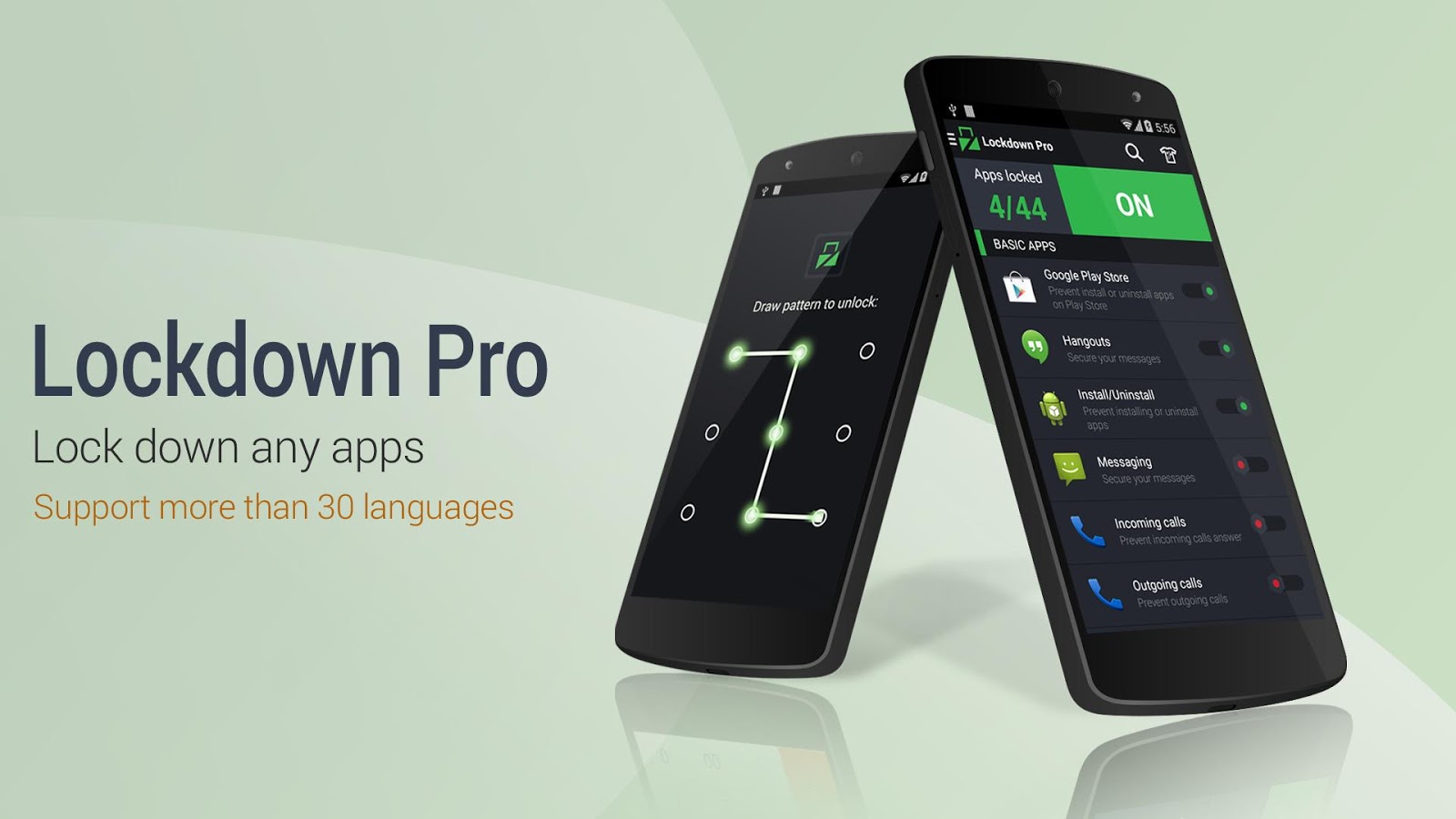
Lockdown Pro Premium 2.0.5 - Full Android Application Free Download | 5.9 MB
★ Lockdown Pro is the BEST applock, supporting more than 30 languages. ★
Lockdown Pro can lock any app, such as SMS, Gmail, Facebook, Whatsapp,
SnapChat, Instagram, Viber, Line, Evernote, lock install/uninstall etc. ★
Lockdown Pro can hide pictures, videos (support .gif image).
Developer: AppPlus.Mobi.
Features Of This Application:
Lockdown Pro is the BEST app lock and privacy protect tool, it can lock
any app, such as SMS, Gmail, Facebook, Whatsapp, SnapChat, Instagram,
Viber, Line, Evernote, etc and special apps including Lock
install/uninstall apps, Lock incoming calls, etc.
One-tap to lock Apps.
Taking pictures after wrong password.
Auto send email with some info and pictures of the person who wants to access your phone.
Auto lock & unlock when you get in/out your setting locations.
Auto lock & unlock when connect/disconnect with wifi.
Active lock apps with a SMS
Three password modes: Pattern Lock, Classic Lock & Calculator Lock and More.
What's New:
Support hiding images (GIF included) and videos.
Re-new user interface by material design.
Added ripple effect same as Android L.
Re-new and added more themes with ripper effect.
New feature trusted devices, support lock/unlock by smart watch.
Added instruction video reset password and turn on fake cover.
Ask for permission:
+ GET_ACCOUNTS: restore premium version when you receive app as gift
+ BLUETOOTH: use for feature trusted devices.
Download Mobile Number Locations Pro For Android Free From Bellow:
Additional information:
Updated: November 18, 2014
App Type: Tools
Size: 5.9M
Installs: 500,000 - 1,000,000
Version: 2.0.5
Requires Android: 2.3 and up Official Google Play Page
X-plore allows you to see inside of your Android device. And also
outside. This is a dual-pane explorer, there are two folders shown at
same time, and common operation such as copying files are done from one
pane to another. And X-plore shows folder hierarchy in a tree view for
clear orientation and fast switching to other location. You may explore
internals of the device, and if you're power user and have your device
rooted, you can make changes to system data - backup files, remove
unwanted applications, etc.
Developer: AppPlus.Mobi.
Features Of This Application:
● Dual-pane tree view
● Root, FTP, SMB, Sqlite, Picasa, Zip, Rar, 7zip explorer
● Disk Map - see which files consume most space on your disk - http://bit.ly/xp-dmap
Xiaomi Redmi Note’s rear camera is all of 13MP, while the 5MP front facing camera should keep the sefie-holics happy.
The madness that we Indians love to import from China is set to
find its crescendo once again, most probably for a few Tuesday starting
December. The Redmi Note, the latest opportunity Xiaomi, is giving us Indians to queue up virually on our favourite e-commerce
site, is expected to start selling in a couple of week’s time. The
Indian site of the smartphone startup, that calls itself an e-commerce
company, has already listed the phone at an unreasonably low price of Rs 9,999.
Before all you decide that this is next phone you guys want to buy
though you would have to subject yourself to the ignominy of having to
enter a virtual line, something we Indians would never do in public, we
thought you should read up what this phone gives you for Rs 9,999.
The Redmi Note is a phablet, as suggested by the name. But unlike the
Samsung Galaxy Note this one does not give you a stylus. But then that
would have been too much to ask for at this price point. The
phone is powered by an octa-core MTK 6592 1.7GHz processor from
MediaTek. It has a 5.5-inch HD IPS display that will draw power from a
3,100 mAh lithium-polymer battery. The rear camera is all of 13MP, while
the 5MP front facing camera should keep the sefie-holics happy.
Overall, not a bad deal at Rs 9,999. Not a bad deal at all.
But then that is what Xiaomi is selling, the compelling value for
money proposition. There is no other company that will give you an
octa-core processor or a 13MP camera for under Rs 10,000. That should be
a good reasons to test you faster finger first for a few Tuesdays
before the new year.
Apple’s highly anticipated iPads – iPad Air 2
and iPad mini 3 – were launched in October. The Cupertino Company
didn’t ignore the Indian market and was quick enough to reveal what the
prices would be for the devices in India. The all new iPad Air 2 and
iPad mini 3 are now available for pre-order on online stores like Flipkartand Infibeam.
The iPad Air 2 as well as iPad mini 3 can be picked in space grey,
white and gold options. The e-retailers promise to ship both devices by
the end of the month.
iPad Air 2 now available for pre-order
As revealed earlier the iPad Air 2 16GB Wi-Fi model is available for
Rs 35,900. The 64Gb and 128GB iPad Air 2 with Wi-Fi models are priced at
Rs 42,900 and Rs 49,900, respectively. The 16GB iPad Air 2 (Wi-Fi and
Cellular) will be priced at Rs 45,900 , 64GB model at Rs 52,900 and
128GB at Rs 59,900.
The Wi-Fi models of the iPad mini 3 are priced at Rs 28,900 for the
16GB model, Rs 35,900 for the 64GB model and Rs 42,900 for the 128GB
model. The 16GB, 64GB and 128GB iPad mini 3 (Wi-Fi + Cellular) models
will be priced at Rs 38,900, Rs 45,900 and Rs 52,900, respectively.
ipad mini 3 now available for pre-order
While we expected the device to go on sale around Diwali along with
the iPhone 6, given Apple’s track record in India it still isn’t too
late considering the devices were launched just a month and half ago.
The Apple iPad Air 2 measures just 6.1mm thin and weighs just 435g.
It is easily the world’s thinnest tablet, almost 18 per cent thinner
than the original iPad Air. The major update is the presence of the
TouchID fingerprint scanner on the power button in the iPad Air 2.
It comes in the golden coloured back as well as space-gray and silver
backs. The other major addition is the presence of an 8MP iSight
camera, which brings in all the goodies such as time-lapse mode, live
HDR, 120fps slo-mo mode, burst mode, panorama and so on. There is an
improved 1.2MP front facing camera as well.
The Apple iPad mini 3 is a generational upgrade over the iPad mini
with Retina Display. The major update with the mini 3 is also the
addition of the TouchID which improves security. The iPad mini 3 is
powered by the Apple A7 SoC and just like the iPad Air 2, will run on
iOS 8.1. It also gets the 5MP iSight camera like the iPad mini 2. Most
of the other aspects of the iPad mini 3 have been carried forward from
its previous iteration – the iPad mini 2.
The number of internet users in India
would reach 302 million by December 2014, registering a year-on-year
growth of 32 percent over last year, a study said in New Delhi on
Wednesday.
The report, ‘Internet in India 2014′, is
jointly published by the Internet and Mobile Association of India
(IAMAI) and IMRB International.
The internet in India took more than a
decade to move from 10 million to 100 million and three years from 100
to 200 million. However, it took only a year to move from 200 to 300
million users, it said.
According to the report, the number of
internet users in urban India has grown by 29 percent from October 2013
to reach 177 million in October 2014. It is expected to reach 190
million by December 2014 and 216 million by June 2015.
Compared to last year in rural India,
internet users have increased significantly by 39 percent to reach 101
million in October 2014. It is expected to reach 112 million by December
2014 and 138 million by June 2015.
“In October 2014, there were 278 million
internet users in India. Currently, India has the third largest
internet users’ base in the world but it is estimated that by December
2014, India will overtake the US as the second largest Internet users’
base in the world,” the study said.
China currently leads with more than 600
million internet users while the US currently has an estimated 279
million internet users.
The report also stated that in urban
India, for nearly 93 percent of the respondents, the primary use of
internet is for search, followed by online communication and social
networking.
However, in rural India, entertainment
is the primary reason for internet usage, followed by communication and
social networking.
Google's
10-year run as Firefox's default search engine in the US is over. Yahoo
wants more search traffic, and a deal with Mozilla will bring it.
In a major departure for both Mozilla
and Yahoo, Firefox's default search engine is switching from Google to
Yahoo in the United States.
"I'm thrilled to announce that we've
entered into a five-year partnership with Mozilla to make Yahoo the
default search experience on Firefox across mobile and desktop," Yahoo
Chief Executive Marissa Mayer said in a blog post Wednesday. "This is
the most significant partnership for Yahoo in five years."
The change will come to Firefox users in
the US in December, and later Yahoo will bring that new "clean, modern
and immersive search experience" to all Yahoo search users. In another
part of the deal, Yahoo will support the Do Not Track technology for
Firefox users, meaning that it will respect users' preferences not to be
tracked for advertising purposes.
With millions of users who perform about
100 billion searches a year, Firefox is a major source of the search
traffic that's Google's bread and butter. Some of those searches produce
search ads, and Mozilla has been funded primarily from a portion of
that revenue that Google shares. In 2012, the most recent year for which
figures are available, that search revenue brought in the lion's share
of Mozilla's $311 million in revenue.
Google now has Chrome, though, and it
doesn't have to share search-ad revenue from that browser with anybody
but itself. Yahoo, meanwhile, has ambitions to reclaim its former
prominence in Web search.
Yahoo showed a preview of a revamped search interface that Firefox users in the US will start seeing in December.
"At Yahoo, we believe deeply in search
-- it's an area of investment and opportunity for us. It's also a key
growth area for us," Mayer said. "This partnership helps to expand our
reach in search and gives us an opportunity to work even more closely
with Mozilla to find ways to innovate in search, communications and
digital content."
More flexibility in Firefox innovation
Mozilla wanted to move away from a
global search contract to one that offered more regional flexibility,
but the Yahoo deal also was motivated by Mozilla's desire to improve the
search experience for Firefox users, said Mozilla Chairwoman Mitchell
Baker. "They're open to innovations," she said.
That includes work on how Firefox's
"awesomebar" -- its combined address and search box -- retrieves data
both from people's own content and from what's available online. "Search
of external providers and search of our own stuff is closely related,"
Baker said. "There are lot of potential improvements there."
Negotiating with Yahoo was simpler than
with Google, Baker said. Google competes directly to try to lure users
to its own Chrome browser.
"When you have a partnership that has
competitive aspect to it, it does require a lot of time and attention
and focus," Baker said.
Mozilla was in a good bargaining position: search engines have been placing a higher value on its search traffic, Baker said.
"Both arrangements we were looking at
had very good economics," Baker said. "We're utterly confident in our
stability and viability going forward."
More search volume
Search volume is important to search
engines. The more that people search, the more opportunities advertisers
have to show ads, including ads associated with search terms that might
not otherwise be common enough.
Terms of the deal weren't announced. Firefox users will continue to be able to change their default search engine.
Still, Jan Dawson, chief analyst at
Jackdaw Research, thinks many Firefox users will not bother to change
the default settings. "Google should be concerned," said Dawson. "This
could mean a significant switch in market share away from Google toward
Yahoo."
Google didn't immediately respond to a request for comment.
Firefox was an early leader in building a
search box directly into the browser, but after a decade sending
traffic to Google, Mozilla concluded it was time for a change.
"Google has been the Firefox global
search default since 2004. Our agreement came up for renewal this year,
and we took this as an opportunity to review our competitive strategy
and explore our options," the organization said.
Mozilla has toyed with search-engine
changes before, for example with a dalliance with Yandex in Russia, by
setting Baidu as the default search engine in China and by making Bing,
from erstwhile rival Microsoft, another option.
Yandex back for search in Russia
The new deal with Yahoo is only one
change in which Mozilla will become more locally flexible, the nonprofit
organization said. Mozilla is keeping Baidu in China and switching back
to Yandex in Russia. Mozilla isn't actively looking at other search
changes right now, Baker said.
The Yahoo-Mozilla deal is an alliance of
underdogs. Mozilla's share of browser usage has been slipping in recent
months, and Yahoo is third place with 10 percent of US searches in
October, according to ComScore. For Yahoo, that was still enough for
quarterly search revenue of $450 million, after payments to the
affiliates that helped drive some of that search traffic. That was a 6
percent year-over-year increase, Yahoo said.
Yahoo sold off its search business to
Microsoft five years ago, and Microsoft powers Yahoo search results.
However, Yahoo keeps some of the revenue -- indeed, all of it for mobile
searches. Yahoo declined to comment on specific revenue share terms of
that deal.
"We are coming to the midpoint of the
10-year agreement" with Microsoft, Mayer said after reporting results
for Yahoo's fiscal third quarter of 2014. "We may want to contemplate
changes on both sides. So Microsoft has some rights at that point, so do
we. We're working through this with Microsoft."
Mozilla has been working with Yahoo for months on the partnership, and relations with Yahoo's new CEO has been good, Baker said.
"Marissa has a very strong product
focus, which is wonderful," Baker said. "Really having an executive who
understands the product experience, who's really engaged in it, has been
a real high point. We've been happy that Yahoo has gotten done the
things that said they would get done with us."